


America won the Cold War by being capitalist, but unfortunately its healthcare system isn’t. In medicine we deny ourselves the best economic system we know, and so it disappoints, bloats, drags, and holds the wider economy back. It isn’t socialist either. Few doctors are state employees, and over 40% of the payment activity is private, by patients themselves or by those peculiar institutions that we misleadingly call health “insurance” companies. What’s missing is price transparency. That is the foundation of capitalism’s legitimacy — you owe nothing you didn’t agree to — and the engine of its efficiency, since consumers who face prices are always judging what a thing is worth. Price transparency is in part the victim of a deeply embedded norm, described by Paul Starr in his 1982 book The Social Transformation of American Medicine: The Rise of a Sovereign Profession and the Making of a Vast Industry.
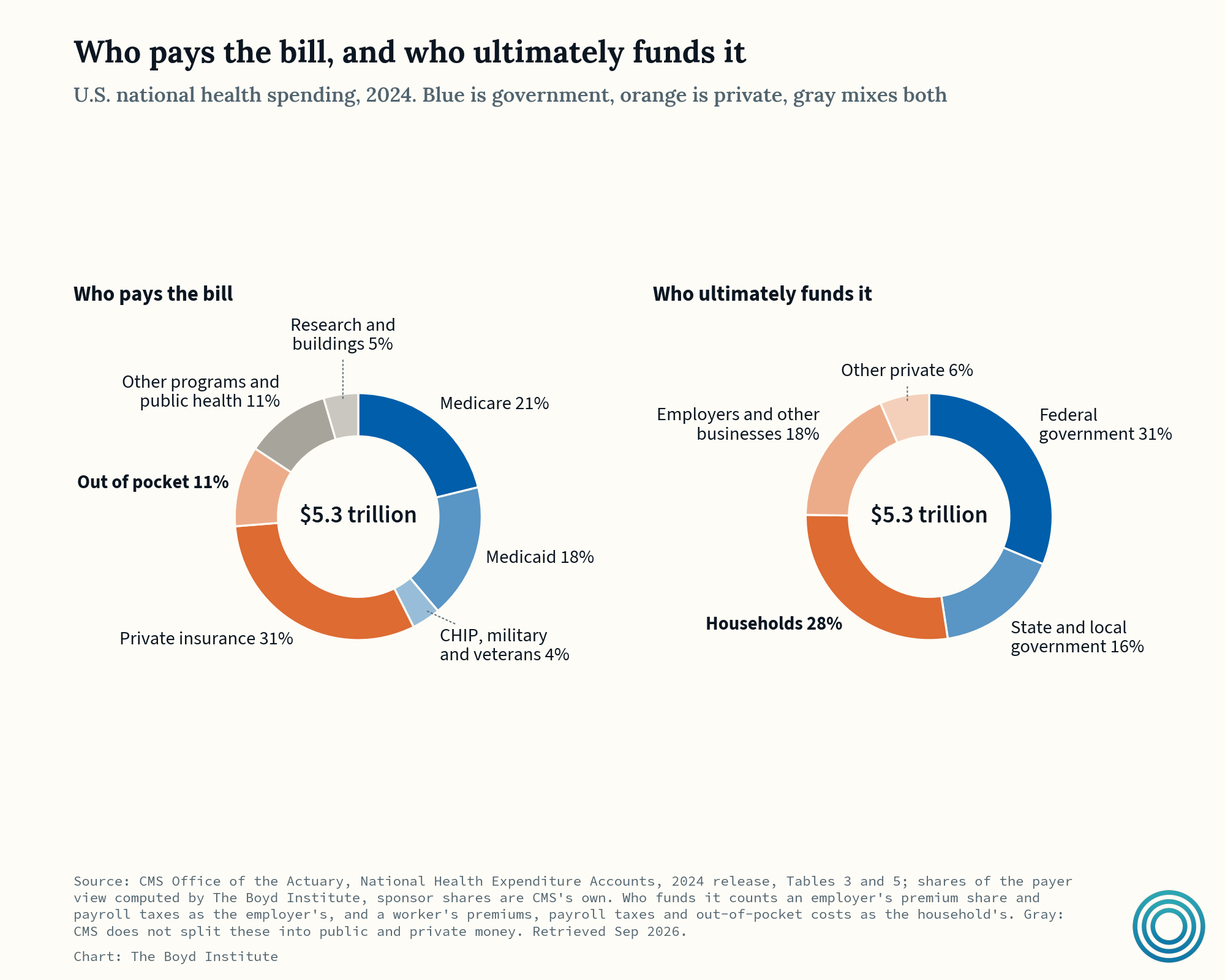
Physicians form a “sovereign” profession, meant to direct patients rather than bargain with their willingness to pay. Ex ante price opacity protects physician sovereignty, and health “insurance” performs not only the proper insurance function of protecting consumers from rare catastrophic risks, but insulates consumers even from routine costs, so that price opacity is tolerable. Of course, all too often, that cost insulation proves illusory ex post, and patients get surprise bills, sometimes ruinous. The No Surprises Act, which took effect in 2022, curbs only some of them.
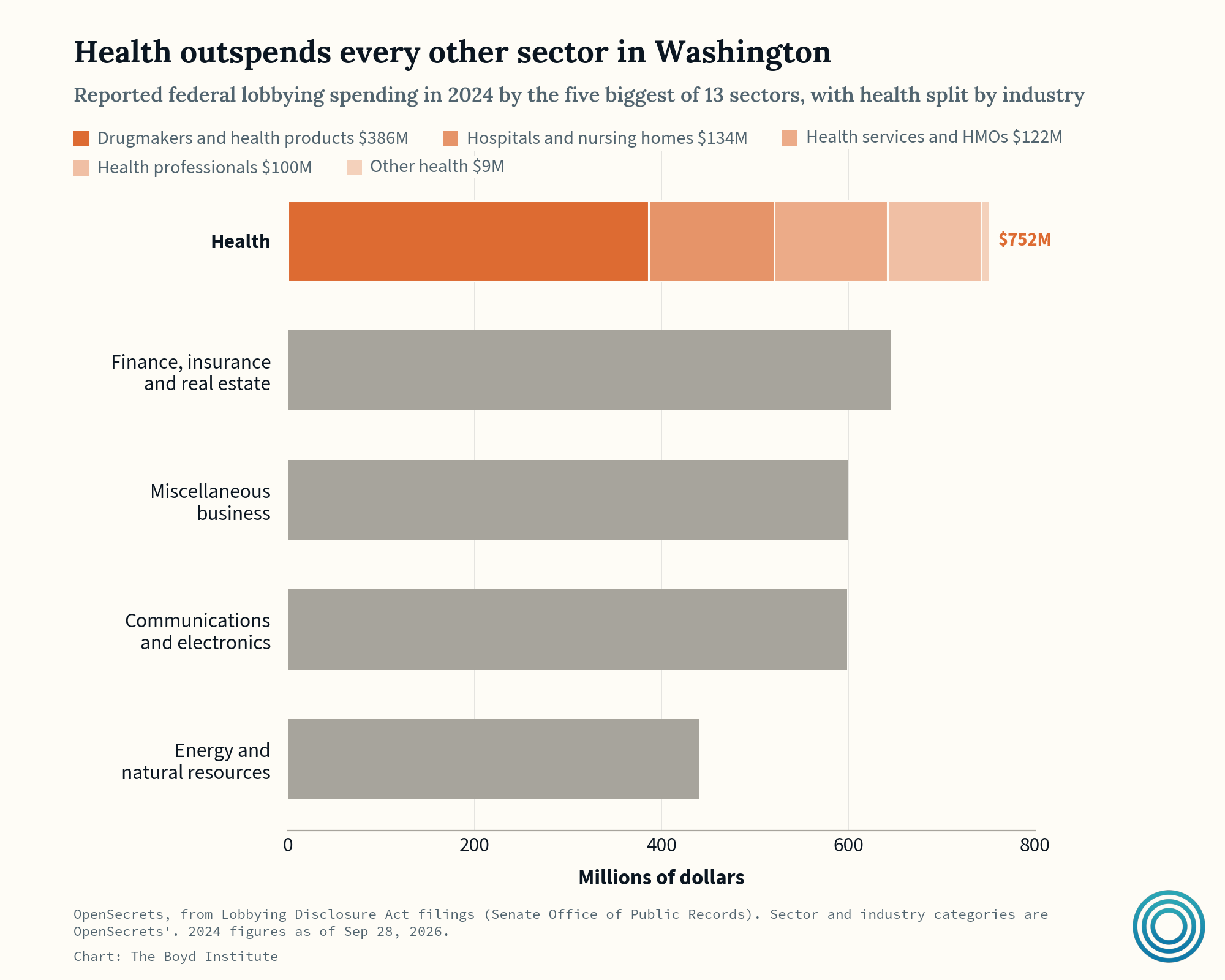
Physicians’ and other suppliers’ self-interest creates incentives toward overtreatment, high prices, and restriction of supply and competition. Checks and balances have emerged, but the trend is not towards consumer sovereignty. “Insurers,” pharmacies, drugmakers, and others hire lobbyists (the health sector spent about $752 million on federal lobbying in 2024 alone) in a tug-of-war for a $5.3 trillion prize, equal to 18% of GDP in 2024, and these fights shape the industry far more than consumer choice does. It’s the lack of price transparency and market competition that let the lobbyists dictate outcomes.
A bit of economics jargon is helpful in naming the result. An “economic rent” is the extra income thrown off by a position artificially protected from competition by regulatory barriers. “Rent-seeking” is the lobbying and positioning done to capture and retain rents. The best description of American healthcare is thus neither capitalism nor socialism but rent-seeking paternalism. The system curtails consumer agency and competition through regulation and obfuscation, in favor of elite guidance and professional sovereignty, worked out through a mix of adversarial advocacy and interest group bargaining that doesn’t acknowledge self-interest but speaks the language of patient welfare.
To be sure, there’s a case for paternalism in many sectors, and it may be particularly strong in healthcare. It can even be life-saving, as we’ll see. But the comprehensive regulatory machinery to which it has given rise — occupational licensing, professional norms, public subsidies, price opacity, and third-party payment — leaves little room for consumer sovereignty or the capitalist competition that innovates for quality and cheapness to meet consumer demand. Other industries have rent-seeking and paternalism, too, but in no other industry except possibly higher education have price transparency and consumer sovereignty been excluded from the central work of resource allocation to such an extent as in healthcare, so that regulatory control and price opacity eviscerate the basic principles of capitalism. We can do better.
The Burden of Paternalism
Paternalism is coercion meant to protect you not from others but from yourself, and it saturates medicine as it does almost no other corner of adult life. Paternalistic coercion is frequently applied not directly to the object of paternalistic concern, but to someone who wants to do business with them. Other people and companies are forcibly prevented from making you offers that the government paternalistically thinks you shouldn’t accept. In healthcare, paternalism spans a spectrum from hard statute at one end to bedside custom at the other. Law decides paternalistically who may treat you and what you may buy. At the level of the office visit, the doctor paternalistically directs and expects patient compliance. People are expected to follow “doctor’s orders.”
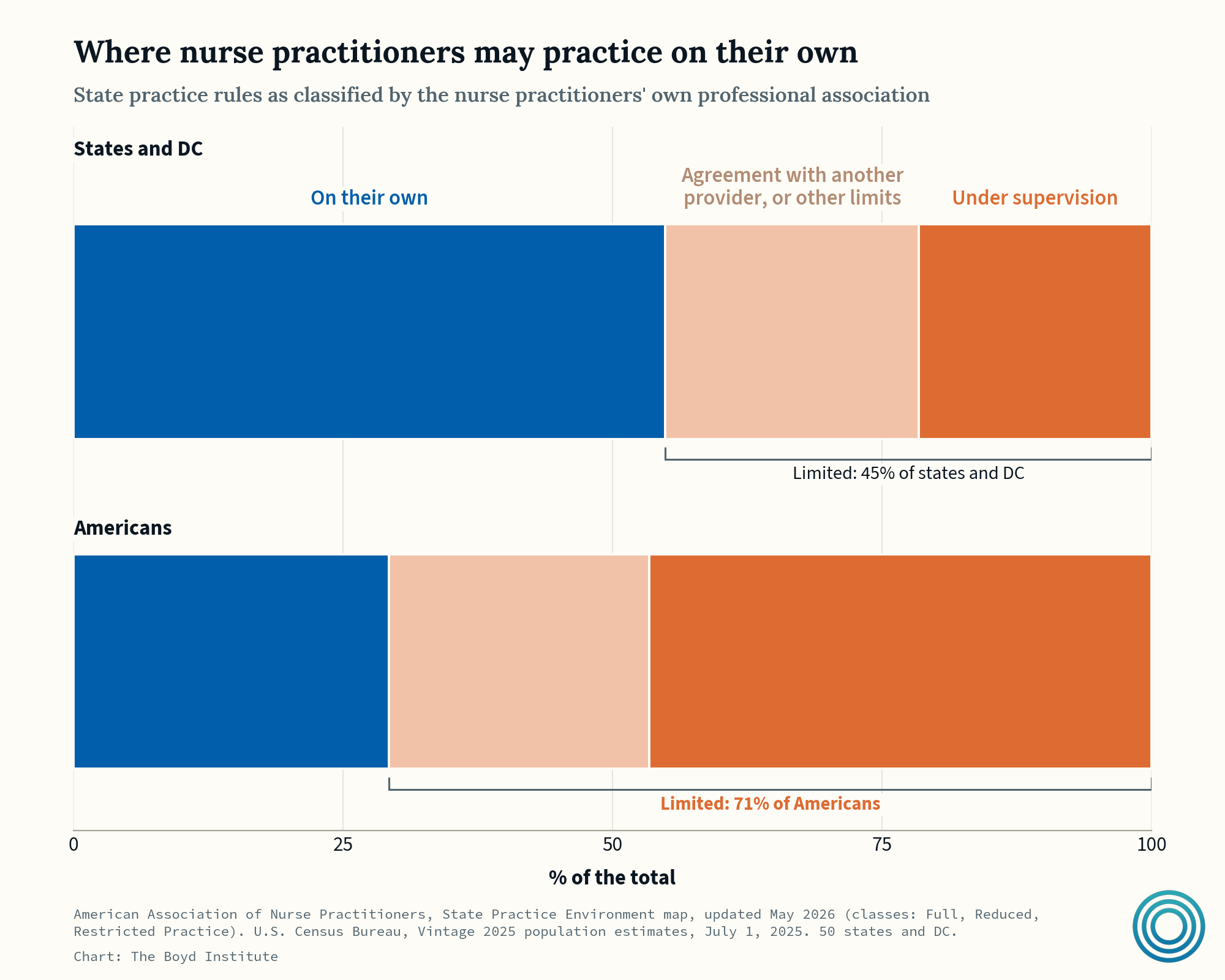
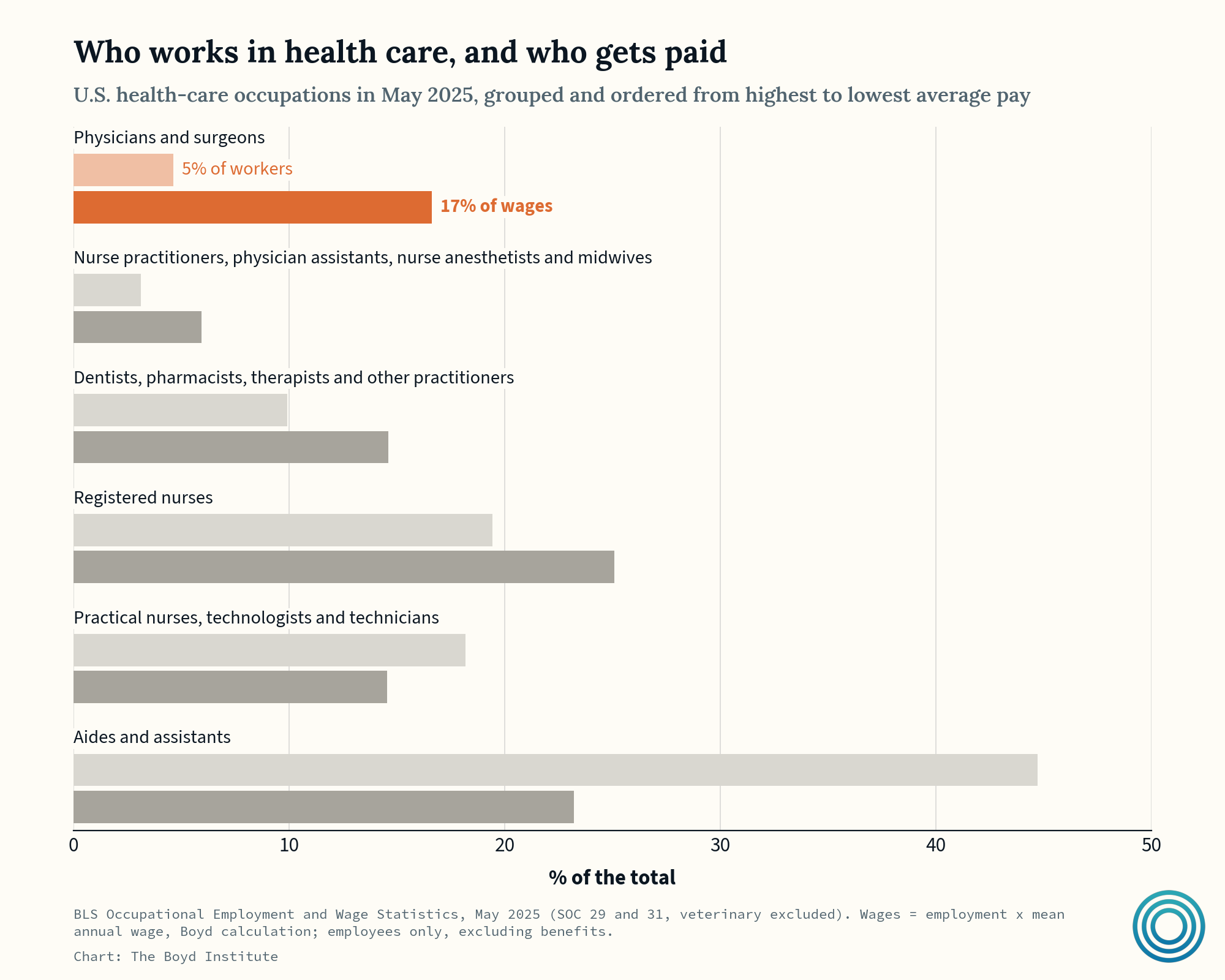
Thus, for example, in more than twenty states, nurse practitioners still face limits on independent practice or prescribing, sometimes through required physician agreements. The cost of that ultimately lands on patients, deterring care. Empirically, for routine visits, refills, and tests, nurse-led and physician-led care yield comparable outcomes. Nurse practitioners earn about half what physicians do, and their care costs less. And they go where physicians won’t — rural areas, the uninsured, the Medicaid-covered — for whom the realistic alternative is not a physician but no one at all. Where nurse practitioners are allowed to practice on their own, checkups rise and emergency-room visits fall. In state legislatures, physicians’ and nurse practitioners’ rival lobbyists each argue for scope of practice rules that favor more market share for themselves. But while the empirical studies matter, the more fundamental question is why the government should be dictating who should be allowed to practice what kind of medicine at all.
Again, dental therapists — midlevel providers who fill cavities safely and cheaply across the developed world — remain unavailable in most states. You might prefer a dentist to do your diagnosing, but that should be your call, not the state’s. Why is the argument conducted in state legislatures, rather than in public advertisements and consumer decisions? Why isn’t medical scope of practice determined by market competition and consumer choice, instead of lobbying and legal coercion?
At the technological cutting edge, these rules get in the way of medical use of AI. You cannot simply hire an autonomous AI doctor to diagnose and treat you. You can ask a chatbot for advice, but it may refuse anything individualized. Startups are building systems that do a primary-care physician’s cognitive work — taking a history, managing a chronic disease, renewing a prescription. In January 2026 Utah became the first state to let an AI system legally prescribe routine refills under a regulatory sandbox, but the larger question is why law should be deciding how consumers use AI for health. Chatbots are far more cheap and convenient than a doctor’s appointment, and would be used in many situations where a doctor’s assistance would not be sought. Many people are getting savvy to the peculiar mix of brilliance and fallibility in AI tools, and could navigate the epistemic nuances well. It’s the sort of thing the market should be left to discover. Instead, under a healthcare regime of rent-seeking paternalism, the awkwardness of whether an AI doctor is a device the FDA approves or a worker that states license is hard to surmount to get to yes.
It’s hard even to get your own medical records to give Dr. Chatbot the context it needs. A quiet paternalism governs medical privacy. Financial data provides an instructive contrast. Lenders and credit bureaus trade repayment data freely, and the payoff for consumers is, first, a portable reputation that puts a loan within minutes’ reach, and second, that you can download a credit report for yourself. While patient data is supposed to be shareable among medical providers, interoperability problems get in the way of that, and it’s not clearly in anyone’s interest to solve them, because the difficulty of moving your data to the next provider is an advantage for your current provider in retaining your business. By contrast, insurers would have ample incentive to compile the data if they were allowed to seek out and compete for the most favorable insurance customers. Instead, paternalism and third-party payment create a universal fog.
Paternalistic laws also limit what you may buy. Many common medicines, like an albuterol rescue inhaler or a blood-pressure pill, require a prescription, even if you’ve taken them for decades. Continuing a medication you know that you need can hinge on a clinician’s renewal, sometimes via another paid visit. Again and again, a service you might reasonably want is withheld, ostensibly to protect you, but often in ways that hurt your access or increase your cost, while protecting the incomes of incumbents.
The standard justification for healthcare exceptionalism traces to Kenneth Arrow’s 1963 paper “Uncertainty and the Welfare Economics of Medical Care.” Patients are often sick, frightened, and poorly informed, unable to judge whether a diagnosis is right. This information asymmetry, Arrow argued, drives medicine to grow its own non-market institutions, and Arrow’s argument tracks the kind of reasoning and intuition that continues to support paternalism. The patient doesn’t know, so the doctor should decide. Yet markets routinely handle “credence goods” whose quality the seller grasps far better than the buyer: auto repair, tax accounting, litigation, real estate. Darby and Karni, who coined the term, observed that when the same expert both diagnoses a problem and sells the fix, the customer may never learn, even afterward, whether the work was needed, so a temptation to oversell is built into the trade; yet they found that reputation, repeat business, and competition among sellers hold such fraud to a tolerable equilibrium level rather than letting it run unchecked.
Surveying the literature a generation later, Dulleck and Kerschbamer sorted the dangers into overtreatment, undertreatment, and overcharging, and showed that when the work performed can be verified, or the seller can be held liable for failing to fix the problem, market forces go a long way toward disciplining all three, without the buyer needing to become an expert. Around each such market, reputation, reviews, competition, brokers and advisors evolve to help people buy what they cannot fully judge. The alternative to paternalism is not to leave patients unguided, but to let the market find better ways to guide them. In other credence goods industries, there are licensing and cartel arrangements to some extent, but none disempower consumer sovereignty to the extent of healthcare.
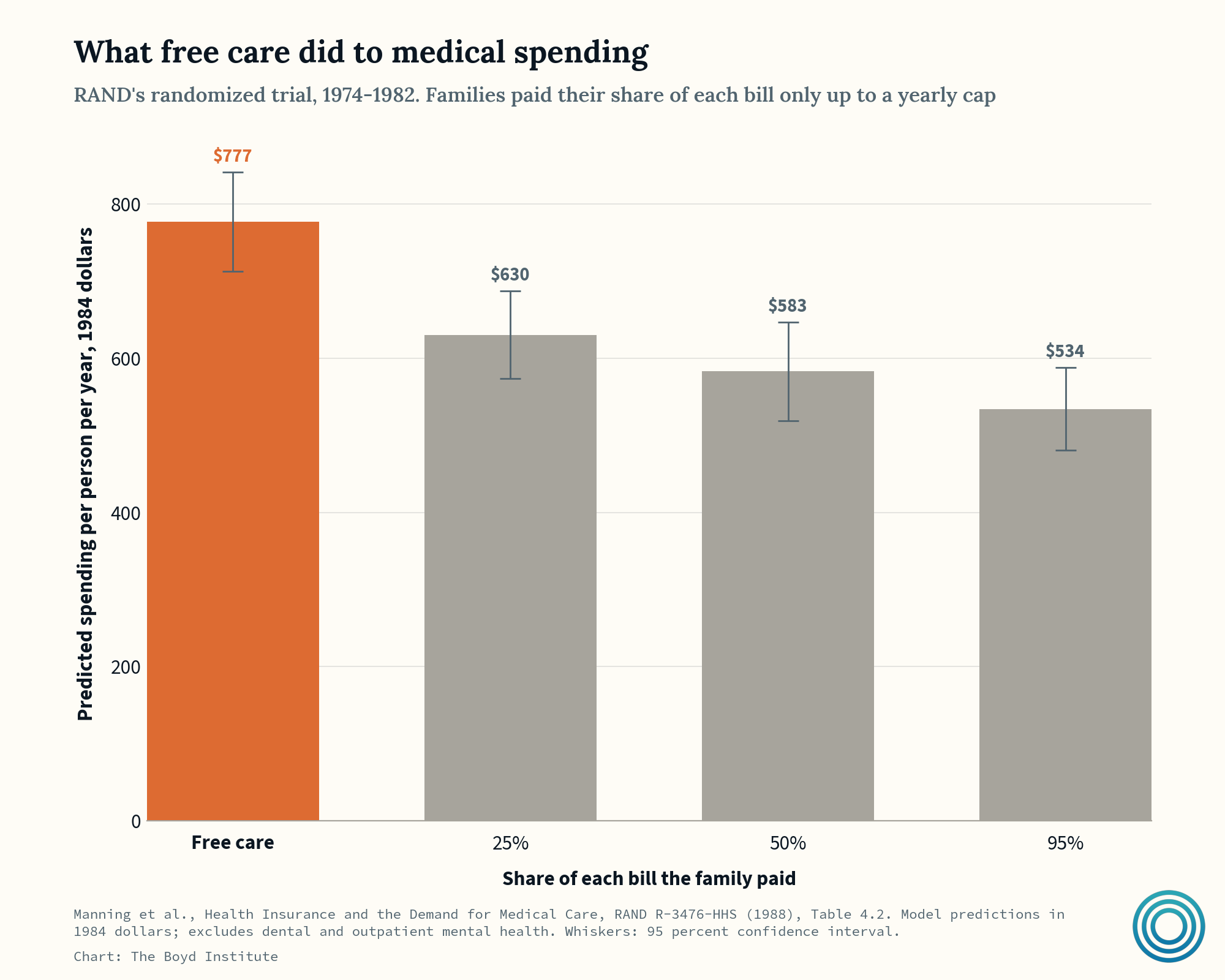
At a basic level, much of healthcare paternalism consists in causing people to get medical treatments for which doctors get paid, when people would rather just have the cash. The RAND Health Insurance Experiment that ran from 1974 to 1982 showed how this works1. It randomly assigned families to plans that made them bear more or less of their own costs. Those who paid more used less care and ended up, on average, no worse in health, which as a vindication of cost-sharing seems almost too good to be true. What they cut was poorly aligned with what the experts consider necessary, and among the sickest and poorest, the skipped care did show up as worse blood pressure and failing eyesight. People make mistakes. But they also learn, and that slow social learning is, in the long run, wiser than the verdicts of experts. In the RAND experiment, patients had to improvise without the advisory systems that would develop if healthcare went full-spectrum capitalist.
The trouble with paternalism is not only that doctors’ and patients’ interests don’t fully align, but also that in some ways, the patients know more. The patient knows less than his doctor about anatomy, but he knows his symptoms from the inside, and he knows his habits, priorities, and above all his finances as no physician can. “Doctor knows best” is too simple, even clinically, and especially when willingness to pay comes into play. That is the case for consumer sovereignty against the sovereign profession.
Consumer sovereignty need not mean pure caveat emptor, which would be a bit implausible for medicines. But a rule can soften caveat emptor without being paternalistic, so long as it lets informed adults knowingly accept a risk. This is an off-ramp that healthcare law largely refuses to take. It grants no general right to gamble on a drug that the FDA hasn’t approved, or that a doctor won’t prescribe. The federal Right to Try Act of 2018 is the exception that proves the rule: it opens a narrow path to experimental drugs only for patients with life-threatening conditions who have exhausted approved treatments and cannot enroll in a clinical trial2. Sometimes this operates through lawsuits rather than through statutes, and de facto paternalism is the shadow of Americans’ unfortunate litigiousness. The Lyme vaccine can serve as a parable here. Lyme strikes hundreds of thousands of Americans annually. LYMErix, a vaccine, was approved in 1998 and never shown to be unsafe. In its pivotal trial, apart from passing soreness and flu-like symptoms after the shot, vaccinated volunteers suffered no more serious or lasting adverse events than those given a placebo. After approval, a federal review of the adverse-event reports filed by doctors and patients found no pattern suggesting the vaccine was causing harm3. And even if there were risks, some who love walking the New England woods might gladly accept a vaccine’s side effects to de-risk for the disease it prevents. LYMErix was withdrawn in 2002 after sales collapsed amid public safety fears and litigation, despite the lack of adverse safety evidence. There’s no way for consumers to opt out of the false protection provided by other people’s litigiousness. A quarter century passed before a successor even reached regulators: only in 2026 did Pfizer and Valneva report that a new vaccine was more than 70% effective in a large trial and begin seeking approval in Europe. All that time, lovers of walking New England’s woods could not get protected against Lyme disease from a tick bite, though oddly enough, their dogs could.
If LYMErix shows how safetyism can make us less safe, the takeaway is not that the nanny state is always crying wolf. Freedom can be tragic. We let people wreck their lives by drink, promiscuity, and addiction to porn or video games. We protect the right to bear arms, and sometimes that enables suicides that wouldn’t have happened if a person didn’t have access to a gun at the wrong moment. We allow dangerous recreations like ATV riding and parachuting from cliffs. And the opioid epidemic that kills tens of thousands a year4 is another case where many fatalities were downstream of something the government allowed (OxyContin). Opioid deaths flowed from people’s own choices, but taking a few options off the table may pass the cost-benefit test. Yet alcohol and tobacco take far more lives than opioids, and we don’t ban smoking or (since 1933) beer. Most of the risks that paternalism forecloses are far milder than opioids or tobacco. Why not let people choose their own level of medical risk, as we already let them drive cars, smoke, and drink?
Our passivity in the face of medical paternalism may be a spillover from the ritual of the office visit. The doctor hands you no menu and only grudgingly volunteers the cheaper Plan B. Physician paternalism is tolerable when the ask is a daily pill or a single operation. “Doctor’s orders” carry that much authority easily enough. But people can’t be expected to tamely comply when a recommended course of treatment costs a serious slice of a patient’s annual, or lifetime, income. Then the conversation has to turn to money and trade-offs, and maybe to family, or even to the will to live and bequest motives. Realtors talk about those things. Life-insurance salesmen can talk about them. Physicians would rather not. It is not the bearing of a sovereign profession, and not what they trained for. That is probably the deep reason why American medicine is so extravagantly opaque about price. It protects clinical paternalism. And the institution built to keep the exam room insulated from financial arithmetic, so that the doctor can keep prescribing and the patient keep complying, is the one we so misleadingly call “insurance.”
Price Opacity and Pseudo-Insurance
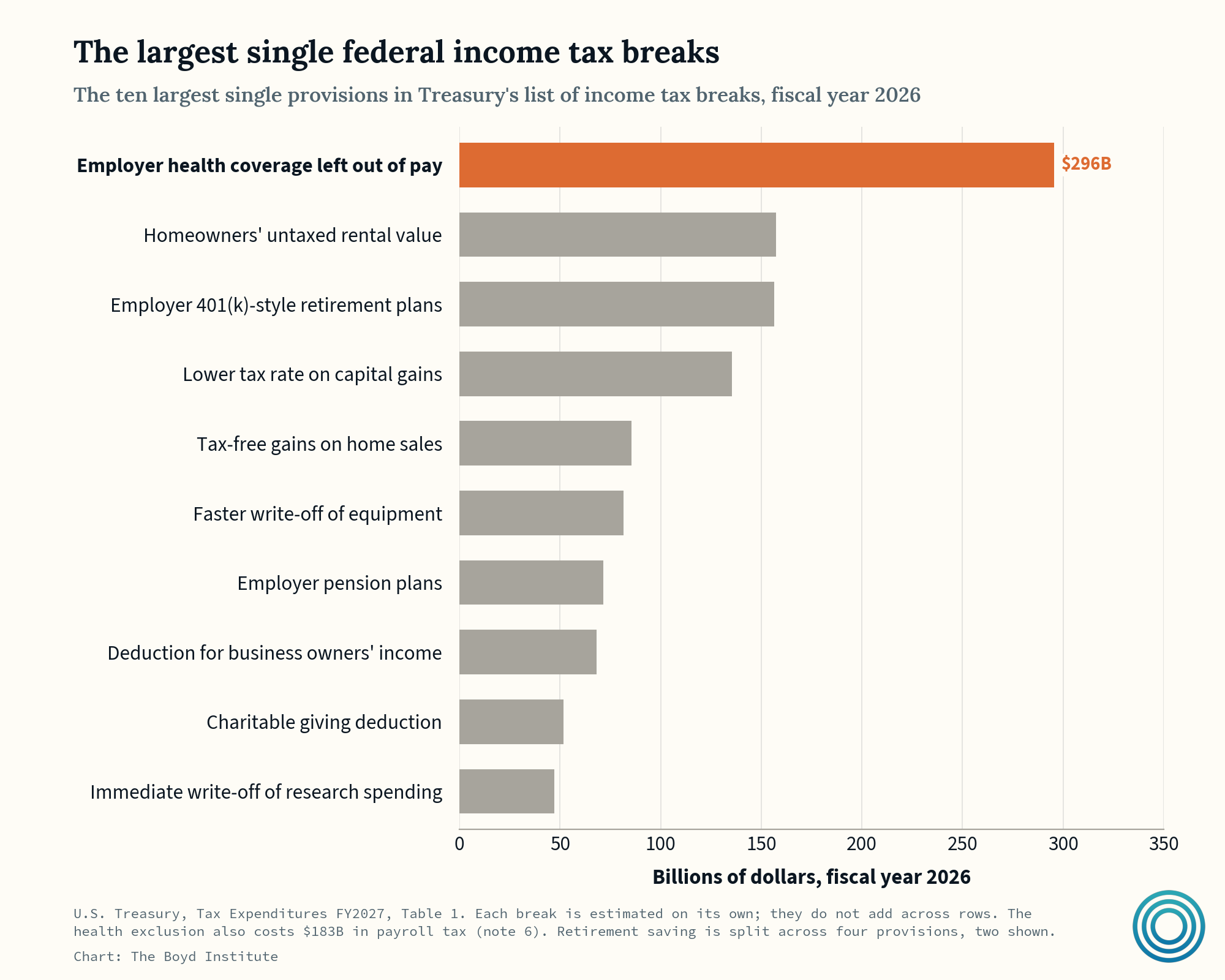
What we call “dental insurance” isn’t insurance at all. Insurance smooths consumption by covering large costs. Dental plans cover small ones and quit precisely when a crown or root canal makes them large, capping out at a thousand or a few thousand dollars a year. So why does it exist? One reason is the tax treatment of employer health benefits. Pay a worker in dental coverage rather than wages, and the compensation escapes the federal income tax.
Major medical coverage, by contrast, does provide real insurance, but that isn’t its main job. Insurance, properly understood, is a service that smooths consumption between the lucky and unlucky scenarios, trading a little expected wealth for higher expected “utility,” as shown in Figure 1:
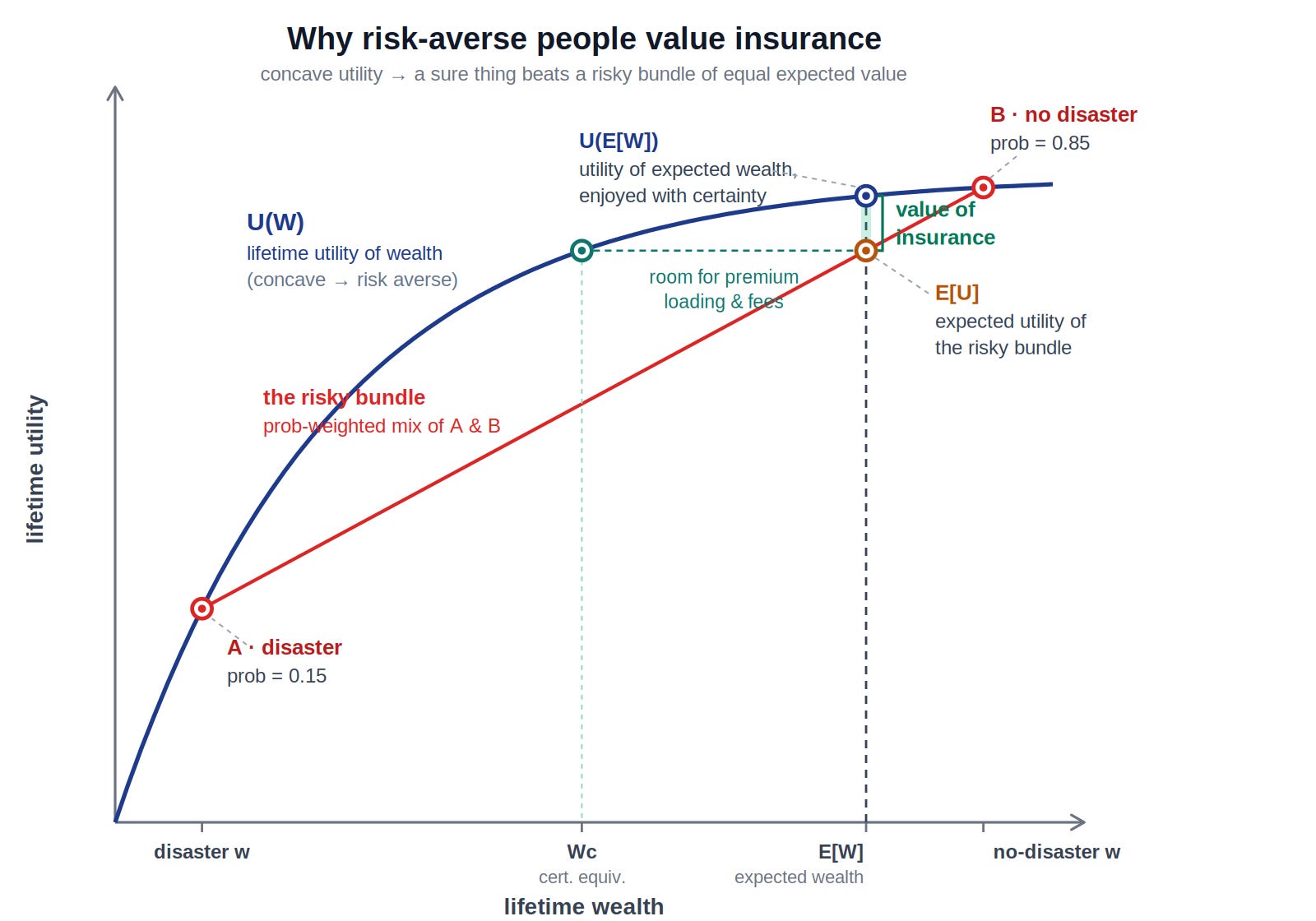
The chart shows how lifetime utility rises with wealth but flattens as it grows, since each extra dollar adds a little less happiness than the last. Happiness isn’t measurable, so this is plausible hedonic psychology rather than proof. But it’s the best general explanation for why people purchase insurance. Economists call it diminishing marginal utility. Someone facing a risky future — comfortable wealth if all goes well, along with potential setbacks or disasters — is worse off than they would be if they could remove the uncertainty and just get average or “expected” value. They’ll be willing to sacrifice not only the upside but some expected (average) wealth for more safety. The least sure sum that a person would accept in place of the gamble is his “certainty equivalent.” Because that certainty equivalent is less than average wealth, insurers can make money taking the premiums and paying the occasional claims.
The curvature of utility is needed to provide some margin, because insurance faces not only general administrative overhead, but also the classic insurance-specific problems of adverse selection and moral hazard. Adverse selection occurs when people know things about their risk profiles that insurers don’t. People whose unobservable risks are higher will opt into insurance, making the insurer’s customer pool more expensive to serve than its observable traits would suggest. Moral hazard occurs when people’s risk profiles depend to some extent on their own behavior, and the fact that they have insurance makes them behave in riskier ways. In the worst case, this involves actual fraud, e.g., a person might deliberately crash a car that’s insured for more than it’s worth. More often, people get careless or live a bit more dangerously, e.g., you go skiing because if you break your bones, your insurance company will foot the medical bill, not you. Where adverse selection and/or moral hazard run strong enough, a risk becomes all but uninsurable, which is why private unemployment insurance, for example, barely exists. Insurance works best for risks that are statistically predictable on readily observable traits, which don’t depend too much on consumer behavior; and where the risk is large compared to the insured’s wealth or income. Below a certain level, smoothing a small bump isn’t worth the premium, though insurance may exist for other reasons, such as legally mandated accident liability insurance for cars.
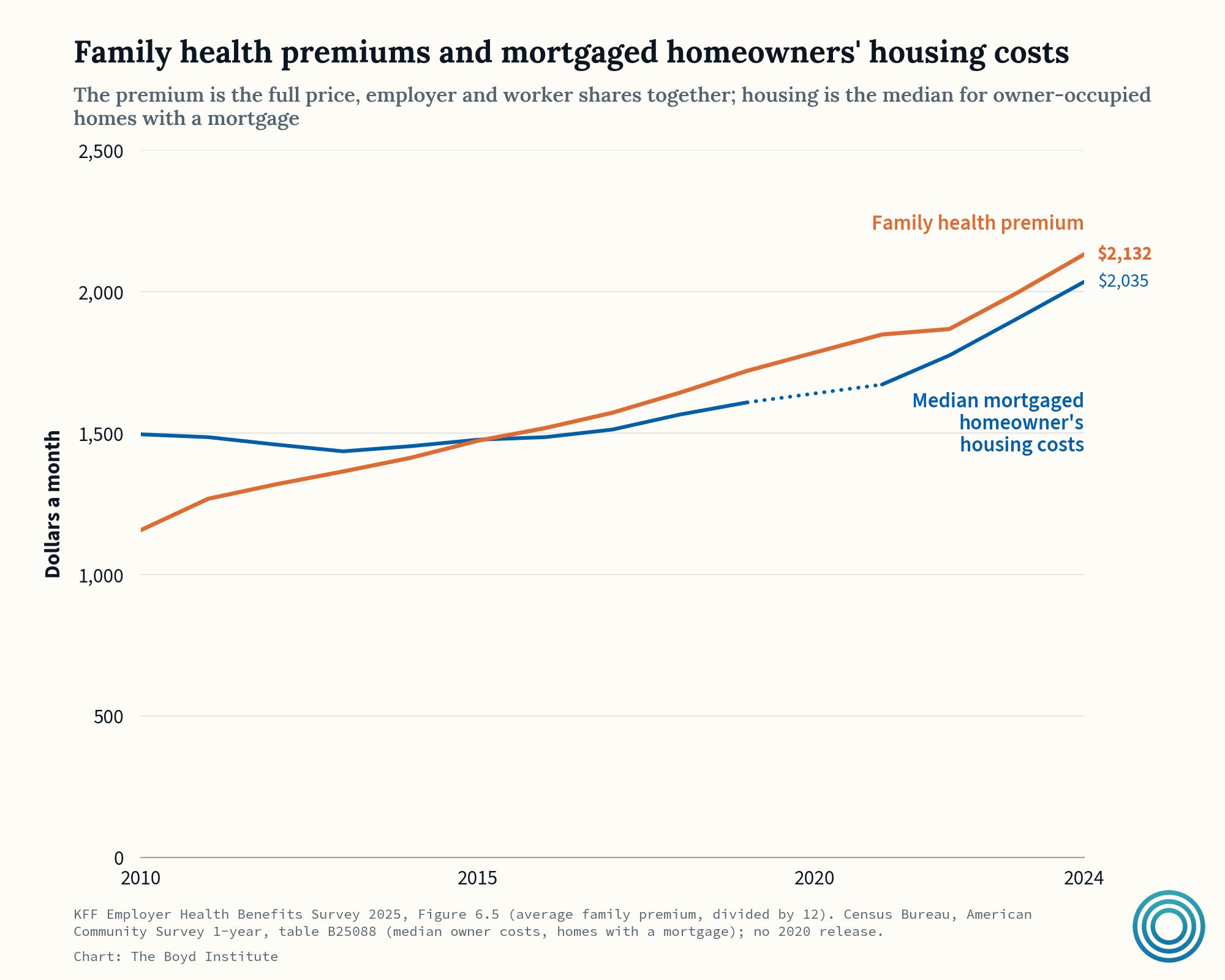
“Health insurance” doesn’t operate like that. It typically helps you pay for every visit with a small copay. It does provide real protection against catastrophe, but it’s mixed up with insulation against routine costs, in exchange for premiums that many families could not afford unaided by employers or the government. The average employer-sponsored family plan cost $26,993 in 2025, or about $2,250 a month, more than the median mortgaged homeowner’s entire monthly housing bill, with mortgage, property taxes, insurance, and utilities included5. “High deductible” plans are closer to real insurance, but even they kick in well before medical bills put a major dent in lifetime wealth.
Insurance as cost insulation instead of risk smoothing adds two new layers of social cost. First, patients lose any reason to shop or bargain for cheaper healthcare. Second, providers gain a perfect alibi for telling them nothing about cost.
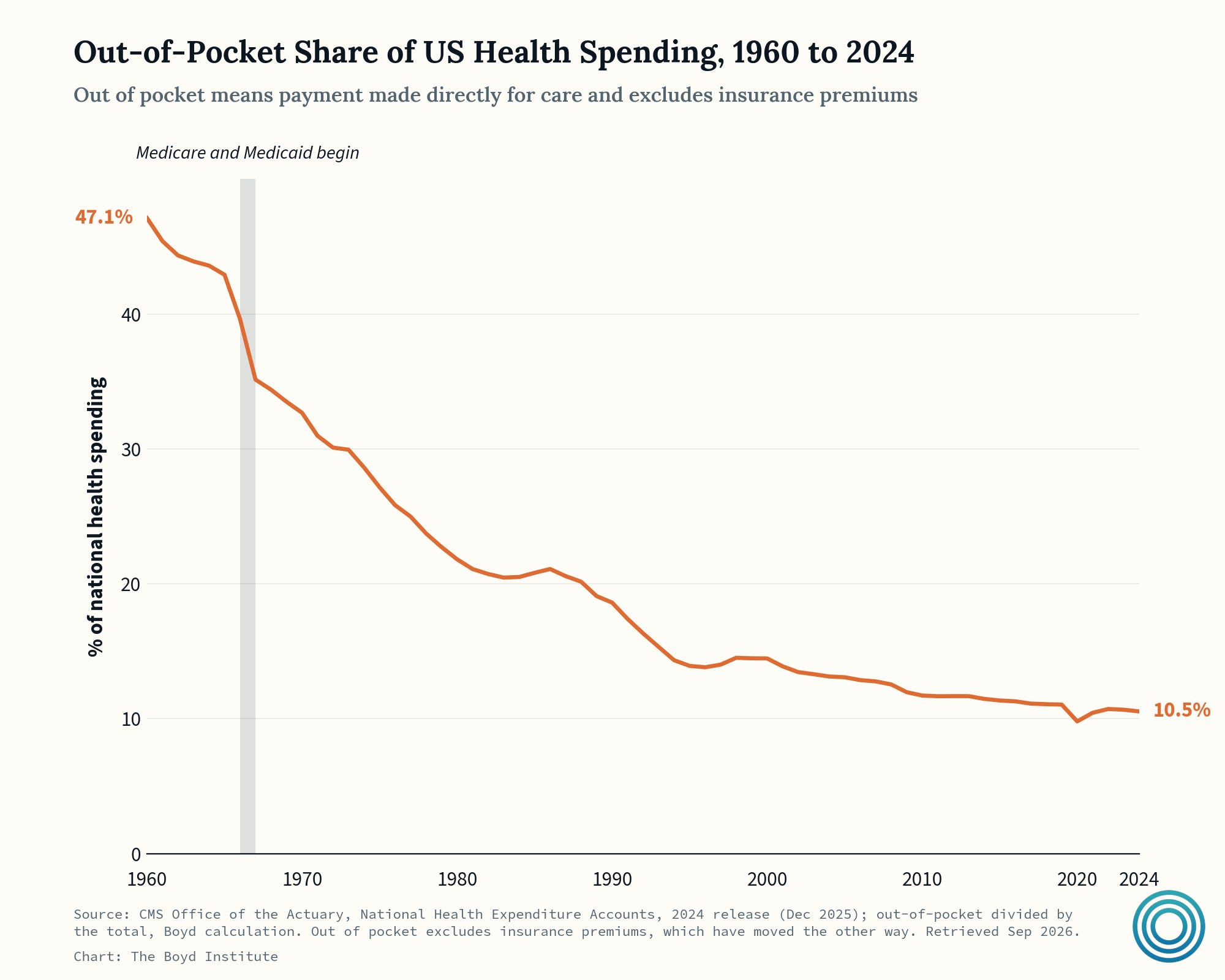
Healthcare price opacity is extreme, and “secret shopper” studies have caught it for over a decade. In one, researchers posing as a self-paying patient called 122 hospitals (two in every state, plus the nation’s 20 top-ranked orthopedic hospitals) and asked for the complete price of an elective hip replacement. After as many as five calls, more than a third still could not give a complete price, and the estimates that did come back ranged from about $11,000 to $126,000 for the same procedure, more than a tenfold spread6. A decade later, after a federal rule began requiring hospitals to post cash prices online, another team checked whether 60 hospitals’ posted prices for two routine services, a vaginal childbirth and a brain MRI, matched what the same hospitals quoted secret shoppers by phone. The two numbers were poorly correlated, and the phone quote was not reliably the lower one: several hospitals posted childbirth prices above $20,000 online but quoted under $10,000 by phone, while two quoted more than $5,000 for an MRI they listed online at about $2,000.
Pricing a given patient’s care is hard, but other industries also have to deal with complex, contingent pricing, yet they manage to settle terms in advance. Medicine uniquely acts as if it has the right to perform a service and then bill whatever it likes, with no meaningful prior consent, even for charges that swing by multiples for the same procedure, and are often ruinous for patients who didn’t know ex ante what they would owe.
The perceived need for health insurance is driven not just by the risk of genuine catastrophe, but by the fact that if you go to the doctor, you face mysterious liabilities, and you need a big company in your corner to shield you from that. You don’t know if the doctor is billing you fairly, and you can’t fight back. Hopefully the insurance company does, and can. You buy insurance to keep from being held hostage to whatever bill the hospital sends. Health “insurance” became even more misnamed when the Affordable Care Act barred insurers from denying coverage or raising prices for pre-existing conditions. Pricing for risk is the heart of insurance.
Banning insurers from pricing properly for risk made it part of a larger system of transfers from the healthy to the sick. This involves the familiar trade-off between equity and efficiency, with inefficiency resulting from (a) reduction of the incentive for people to adopt healthy lifestyles to reduce medical costs, and (b) when people do get sick, reduction of the incentive to wait and see, self-medicate, or shop around for the cheapest care. But the other perversity here is that some of the sick are rich and some of the healthy are poor, so the transfers can run backwards. This happens a lot, because the young tend to be healthy with few financial assets, whereas older people are often affluent, but with more health problems. So a lot of transfers from the healthy to the sick are inevitably transfers from the economically struggling to the relatively well-off.
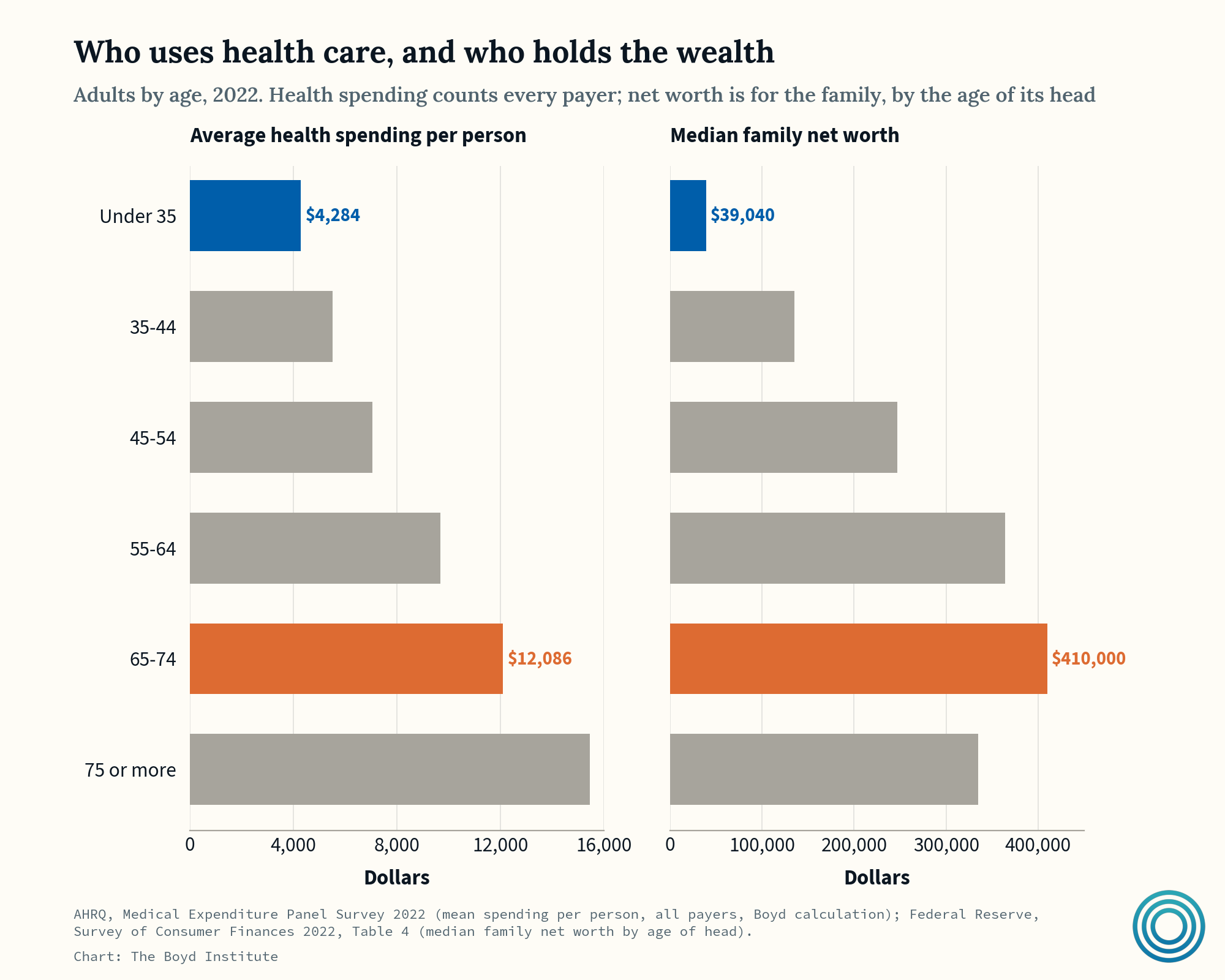
A lot of what’s wrong with healthcare is plausibly downstream of price opacity. Excessive occupational licensing and restrictive scope of practice rules, for example, are a distinct issue, but the benefits of looser scope of practice are masked by the fact that it usually isn’t a patient paying, even when they could easily afford to do so.
Diagnosing the Blight
Rent-seeking and paternalism are common across the economy, and they often travel together. In Bottleneckers, Mellor and Carpenter of the Institute for Justice catalogue, with grim hilarity, the absurd arguments by which lobbyists for casket-sellers, hair-braiders, and food-truck vendors dress protectionism as public safety. But in other industries, the bottleneckers have to argue against a default of consumer sovereignty which makes sense to people and can be articulately defended. Competition is the rule, paternalistic rents are the exception. In healthcare, consumer sovereignty is orphaned and marginal, surviving only in pockets like LASIK, an elective and almost never insured procedure bought and sold in an ordinary market, whose average price has barely risen in a quarter century, or the Surgery Center of Oklahoma, a rare medical provider that posts all-inclusive cash prices online. But such pockets of consumer sovereignty add up to a rounding error in a multi-trillion-dollar industry that rarely answers to consumers’ wallets. Opacity and paternalism are so entrenched that we can scarcely imagine what healthcare capitalism would even look like. When healthcare policy is debated in state legislatures, rent-seeking paternalism is the only game in town. Legislators who champion free market policy in other areas don’t know where to begin, and might not want to get on the wrong side of the lobbyists anyway.
Healthcare does have its peculiarities that make capitalism hard to implement, like the emergency that allows no shopping, the unconscious patient, and a fair amount of complex but urgent decision-making. But they are bounded, not pervasive, and the parallels to other credence-good markets give good reason to expect that opening the industry to consumer sovereignty would yield large and lasting gains. There would be losers, too. Some now sit on the receiving end of the status quo’s hidden redistribution. But what gives overhaul the most urgency is simply that the present system is unjust, because it cannot help sending people bills they never agreed to, because it could not tell them the prices in advance. Those bills are often very burdensome, but even when affordable, they lack the legitimacy of real consent. And the whole economy is increasingly hostage to healthcare dysfunction as Medicare grinds along its budget-busting path, with its hospital insurance trust fund projected to run dry in 2033. It is high time the American economy stopped following doctor’s orders.
Nathan Smith is a Harvard PhD economist and the author of Principles of a Free Society. He writes about economics, immigration, and more at Welcome the Stranger. He won first place in the Boyd Institute's housing essay contest and third place in our debt-and-deficits contest.
The RAND experiment's own numbers: families with free care spent about 46% more than families paying most of their bills, with no difference in average health. The poorest and sickest were the exception. RAND's summary; the health findings.
Right to Try requires a life-threatening diagnosis, no approved options left, and no trial you can join, and the drugmaker can still say no. FDA’s older compassionate use program is broader but needs both FDA and the manufacturer to agree.
In the pivotal trial the vaccine was 76% effective after three doses; sore arms and flu-like symptoms were more common than with placebo, serious problems were not. A federal review of reports filed through mid-2000 found fewer arthritis cases than you’d expect by chance.
CDC’s figures: about 54,700 opioid deaths in 2024, down 27% from 2023 and well off the 2022 peak.
Rosenthal, Lu and Cram, 2013. Callers posed as the granddaughter of an uninsured 62-year-old. Counting hospital and surgeon quotes together, 12 of the 20 top-ranked hospitals and 64 of the other 102 could name a full price.

The best cure for what ails you is to never use the medical system for anything.