



As we head into the New Year, the Boyd Institute is doubling down on a simple idea: America needs to get better at solving real problems. That belief has guided our work from the beginning, and now we’re naming it explicitly. We want to shift our political culture away from performative noise and back toward serious, solution-oriented work.
To that end, I have some exciting announcements to share.
But first, a quick reflection.
2025 in review
Over the past year, we completed three policy sprints, each aimed at critical strategic issues.
Strategic minerals in Africa, where we proposed the Congo Corridor as a practical framework for securing critical supply chains while supporting regional development.
Drone warfare and autonomy, which led to the American Autonomy Initiative, a concrete proposal to lean into automation and radically increase productivity.
Housing affordability, our most recent sprint, introduced two under-explored perspectives: the effect of crime on housing, and housing as it relates to middle-class family formation. This sprint also included our first-ever essay contest, which surfaced smart solutions from outside the usual policy bubble. In an essay called The NIMBY Buyout Plan, contest winner Nathan Smith advocated turning land-use vetoes into tradable rights.
Along the way, a few important things happened.
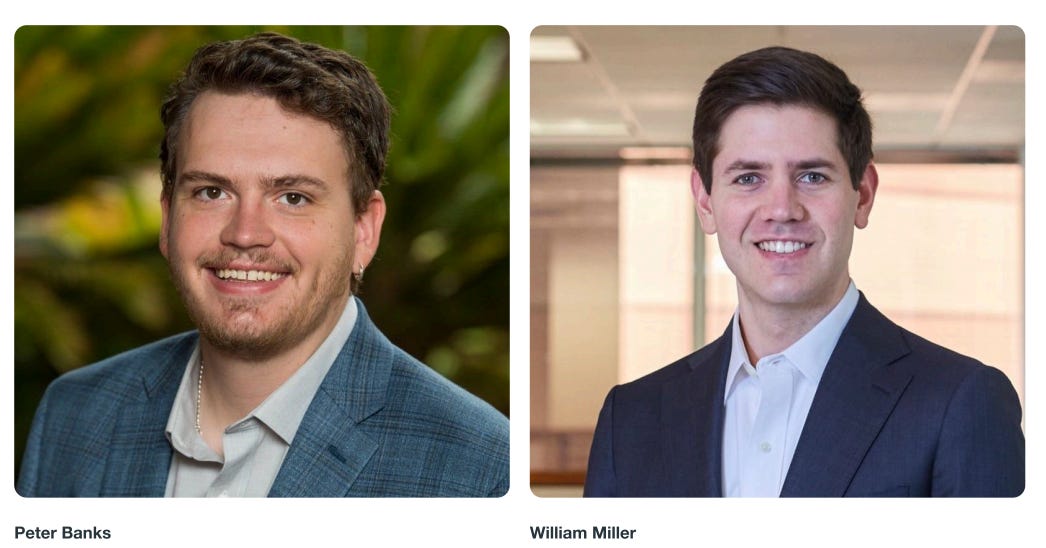
First, we strengthened the team. Peter Banks joined us and led the housing sprint, alongside William Miller, bringing both rigor and focus to our work. Their impact was immediate, and I’m deeply grateful.
Second, we broadened our focus from national security-related issues to other big issues that shape America’s long-term vitality. Housing made that shift unmistakable. Peter and William helped me realize that you can’t talk seriously about America’s future without addressing issues that materially affect everyone.
Finally, and most importantly, we sharpened the institute’s core identity. Boyd exists to help America get better at solving real problems — full stop. The core capability we’re developing isn’t focused on any specific policy domain; it’s about problem-solving itself, taking inspiration from McKinsey, DARPA, and IDEO.
What’s new
With that context, here’s what’s coming next….
1. Our next sprint topic (drumroll please…)
As many of you know, the Boyd Institute operate policy “sprints” in which we focus on a core topic for several months, usually a quarter of the year and sometimes longer. Although we’re still tinkering with our business model, we find that time-boxing our focus forces fast action and keeps things interesting.
Our next sprint goes to the heart of our mission: How can America improve its problem-solving capacity?
Our next sprint goes to the heart of our mission: How can America improve its problem-solving capacity?
We all sense something is off. America talks endlessly about its biggest problems — housing, infrastructure, healthcare, energy, national security — yet even when there’s broad agreement, progress is slow or nonexistent. Nothing quite gets fixed. That’s why we’re digging into this topic.
We view this topic as uniquely leveraged. It’s a meta issue, but not an abstract one. It sits upstream of nearly every issue we care about. And unlike most meta problems, it’s tangible, diagnosable, and actionable.
In this sprint, we’ll examine:
Where America does solve problems well and where does it not
Where and why we fall short
The cultural, institutional, and political dynamics that block progress
Practical ways to shift incentives and norms toward solution-oriented politics
The sprint will include our usual mix of ground-truth research, another essay contest, and concrete proposals. We’ll also experiment more with town-hall style conversations to bring people into the process, not just present finished ideas.

And yes, we’ll be rolling out some Boyd swag. Partly for fun, partly because culture matters, and partly because “solve real problems” deserves to become a meme in our political culture.
Depending on how this sprint unfolds, it may also seed a book or a short doctrine. No promises yet, but we’re open to where the work leads.
2) Leadership update
As we prepare for this next phase, I am grateful to solidify the roles of Peter Banks and William Miller in the organization.
Peter Banks is being promoted to President, responsible for running sprints and managing day-to-day operations. I have complete confidence in his leadership and judgment.
William Miller is joining as Fellow, heading up research, events, and other sprint-related activities.
Peter Banks is being promoted to President, in charge of running sprints and managing day-today operations.
These moves reflect growth, not retreat. I’ll remain Founder & Executive Director, focused on vision, strategy, and external relations. As we build a post-boomer America, Peter and William have skin in the game as young people. Working with them gives me great confidence in Gen Z.
3) Funding our future
Finally, a candid note on resources. Our funding runway is solid for the next 6–12 months, but if we want the Boyd Institute to exist — and matter — beyond 2026, we need support.
To be honest, until recently, I haven’t had enough conviction to aggressively ask for funding. Now I do. That’s thanks to Peter and William, a sharper focus, and a clearer value proposition — even as we recognize we’re still small and figuring it out. As an investor myself, I see Boyd as ready for “early startup capital” to take the next steps.
As an investor myself, I see Boyd as ready for “early startup capital” to take the next steps.
So, we are actively raising money, with a particular interest in major donors who believe America’s problem-solving capacity is worth investing in. We’re also exploring bringing on a part-time fundraiser to pursue grants and institutional support, in case you know of anyone.
If you’re interested in supporting the work, partnering with us, or just want to learn more, I’d love to hear from you directly. Email me at [email protected]. I’d love to share our deck and speak with you.
A final note
Thank you for being part of this journey. If you’re new, welcome. And if this mission resonates, I hope you’ll stay close — 2026 will be a meaningful year for Boyd.
Special thanks to our advisors, board, and Substack friends who continue to engage, challenge, and support the work.
Onward.
Exciting. Good job, guys. Fun to see your ambitions coming to fruition.
That might a bit meta for a sprint (hard to collect data), but I'd invest it with a bit more focus through these themes:
1. Free Markets: We must reject the recent trend toward protectionism and trust markets more. Comparative advantage improves productivity. Education, zoning, immigration, and healthcare are areas where more market reform is needed.
2. Virtue: Game theory (e.g., the prisoner’s dilemma) shows that selfishness breaks systems while virtue fixes them. We need a revival of the classical virtues—justice, courage, prudence, etc. Leaders should urge virtue, and institutions must be allowed to select for it and trust those who demonstrate it.
3. Technology: We need "permissionless innovation," curbing the veto power of regulators and NIMBYs. But beyond just markets, we need a culture committed to envisioning and pursuing the technological frontier, even when it requires prioritizing the common good over self-interest.
4. Leadership, Class and Hierarchy. Problem-solving requires teamwork, and teams need leadership. Democratic egalitarianism has a tendency to undermine the legitimacy of leaders and weaken their authority too much, and the myth of "equality of opportunity" muddles too many people's thinking. We need to re-embrace pragmatic, intelligent, technocratic leadership, and fight back against the "populist" impulse to gratuitously mistrust the kind of people-- the well-educated, tech-savvy "laptop class"-- that is poised to provide it.
Those would be the planks I'd advocate for inclusion in a platform of better American problem-solving.